I'm Doug Mycko, owner of SolarMan Consulting. I've worked with off-grid solar systems on the Big Island since 2006, and I've spent a lot of that time working with OutBack equipment.
There are still a lot of OutBack systems powering homes around the Big Island. FX, VFX, FXR, Radian, FLEXmax 60 and 80 charge controllers, MATE displays, HUBs and FLEXware equipment are still out there doing their jobs every day.
When one of those systems develops a problem, my first reaction isn't automatically, “replace everything.”

First: Find Out What Actually Failed
An OutBack system is made from multiple pieces of equipment. A house losing power does not prove that the inverter itself is dead.
Inverter / Charger
FX, VFX, FXR and Radian equipment can develop inverter, charging, fan, board, relay or communication problems. The symptoms matter.
Solar Charge Controller
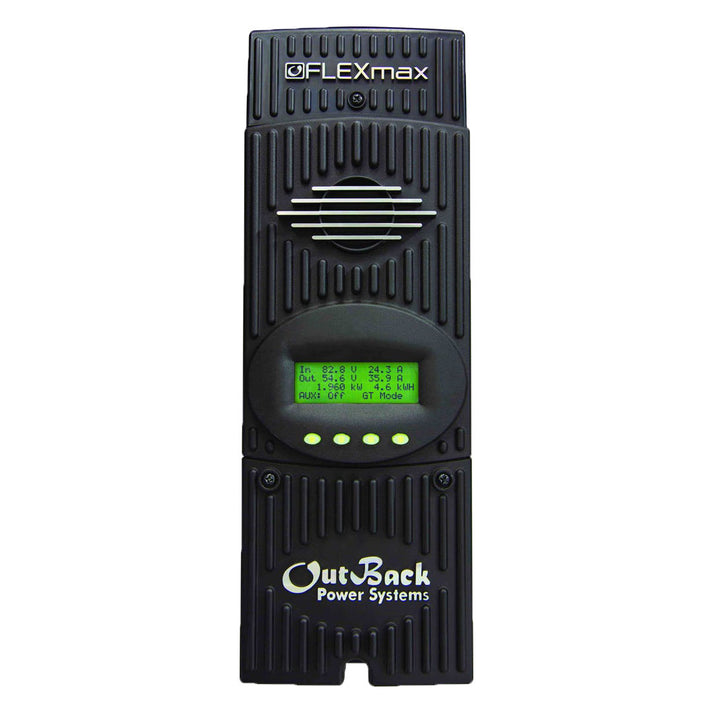
A FLEXmax 60 or FM80 problem can reduce or stop solar charging while the inverter itself continues operating normally.
MATE / Communications
A display, HUB or communications problem can make a functioning system look much worse than it really is.
Battery / DC Side
Low battery voltage, weak batteries, loose connections, breakers, cables or excessive load can create symptoms that get blamed on the inverter.
Common OutBack Problems Worth Diagnosing Before Replacement
When I Would Try to Keep the OutBack System Running
I lean toward repair when the basic system is still sound, the failure can be identified, the required repair part is available, and the repair cost makes sense compared with changing the entire power system.
That is especially true when the customer already has a well-designed OutBack installation that has reliably powered the house for years.
A failed board or controller does not suddenly erase the value of everything else mounted on the wall.
When Replacement Starts Making More Sense
There is a point where continuing to repair an older system stops being the sensible choice.
I start looking harder at replacement when several things happen at the same time: multiple components are aging, the required part is becoming difficult to obtain, the battery bank also needs major work, the customer's electrical loads have outgrown the original design, or the cost of keeping the old system alive is approaching the cost of moving to a current platform.
Parts availability is particularly important in Hawaiʻi. If your entire house depends on the equipment, waiting a long time for a hard-to-find component is more than an inconvenience.
Don't Call Every Replacement an “Upgrade”
Longtime OutBack owners will understand why I make this distinction.
A properly built OutBack system may have operated for many years. It may be rugged, modular and familiar to the owner. Replacing it because the equipment has aged or parts are becoming difficult to obtain doesn't automatically mean the replacement is an upgrade.
Sometimes it's simply a necessary transition to equipment that can be supported going forward.
What Can Replace an OutBack System?
There are several directions we can go, and I don't think every OutBack owner should automatically be pushed toward the same answer.
Modern all-in-one platforms from companies such as Fortress, Sol-Ark and EG4 can make sense when compact integration and modern battery communication are priorities.
For an owner who specifically likes the component-based philosophy of OutBack, I think the MidNite Rosie is particularly interesting. Rosie can be built around a dedicated inverter, E-Panel and separate MidNite solar charge controllers rather than putting every major function into one box.
OutBack Repair Parts on the Big Island
SolarMan stocks and sources repair components for many of the OutBack systems still operating in Hawaiʻi. Depending on the model and current availability, that can include circuit boards, controls, fans, communications equipment and related system components.
If you're trying to identify a part, send me the complete model number and a clear photograph of the equipment label or failed component. That is much more useful than guessing from the appearance of the equipment.
OutBack Problem? Start With the Diagnosis.
If your OutBack system is down or acting strangely, don't buy an entire new system before finding out what actually failed.
I'll help determine whether repairing the existing OutBack makes sense—or whether you've reached the point where replacement deserves a serious look.
Doug Mycko
SolarMan Consulting, LLC
Big Island, Hawaiʻi
808-313-0608
SolarManHawaii.com
Related SolarMan Information
Frequently Asked Questions
Can an old OutBack inverter still be repaired?
Many can. Whether repair makes sense depends on the exact model, the failure, the condition of the rest of the system and whether the necessary parts are still available.
Should I replace my OutBack system just because it is old?
No. Age by itself is not enough information. If the system is reliable and a failure can be repaired economically, keeping it operating may make more sense than replacing everything.
Can a Radian be repaired without replacing the whole inverter?
Some Radian failures can be serviced at the module or board level. The actual fault needs to be diagnosed before deciding what should be replaced.
Does an FM80 problem mean my inverter is bad?
No. The FLEXmax charge controller handles solar charging and is separate from the inverter. A PV or charge-controller problem can exist while the inverter is operating normally.
What should I send SolarMan when I need an OutBack part?
Send the complete model number, a clear photograph of the equipment label, and a description or photograph of the failed part or error message.
SolarMan Consulting provides off-grid solar design, equipment supply, troubleshooting and repair support. Work requiring licensed electrical installation should be performed by appropriately licensed personnel.