I'm Doug Mycko, owner of SolarMan Consulting. I've been working with off-grid solar on the Big Island since 2006. The biggest lesson I've learned is that a successful off-grid system isn't a collection of impressive specifications. Every part has to work together as a power system.
When you're completely off grid, there is no utility waiting behind the inverter. The solar system has to produce the energy, store it, start the pumps, run the appliances, handle nighttime loads and recover after several days of poor weather.
What Makes a Big Island Off-Grid Solar System Different?
Hawaiʻi Island has excellent solar resources, but designing an off-grid home here involves much more than multiplying panel wattage by sunshine hours.
A home in a wet East Hawaiʻi location can experience very different production and recovery conditions than a dry West Hawaiʻi site. Catchment pumps are common. Some homes run substantial air conditioning. Generator backup matters. Shipping replacement equipment back to the mainland can be expensive and slow.
Those realities should affect the design before equipment is purchased.
The Six Parts I Size Together
1. The House Loads
I start with what the customer wants to operate: refrigerators, freezers, pumps, cooking, water heating, shop loads, air conditioning and everything else. The house determines the system.
2. Solar Array
The array has to carry daytime loads and still produce enough surplus energy to recharge the batteries. A large battery bank with too little PV can be frustrating.
3. Battery Bank
Battery sizing is both an energy question and a power question. We need enough kWh for the night and enough output capability for the loads.
4. Inverter
The inverter must support the expected continuous load, simultaneous loads and short-duration surges. Bigger isn't automatically better if the rest of the system can't support it.
5. Generator
The generator isn't an admission that solar failed. In a well-designed off-grid system it is insurance for prolonged poor solar weather and unusual energy demand.
6. Controls & Communication
Modern lithium BMS communication, charge controls, generator settings and monitoring can determine how well otherwise good equipment works together.
Battery kWh Is Only Half the Story
One of the easiest mistakes is choosing batteries solely by storage capacity.
A battery may contain plenty of energy to run ordinary loads overnight but still struggle with a large instantaneous demand. Pumps, compressors and other motors can demand substantial current when starting.
That's why I separate energy capacity from power capability.
Read: How Much Battery Do I Need for an Off-Grid Solar System? →
Water Pumps Deserve Their Own Calculation
On Big Island off-grid homes, the pump is often one of the first loads I ask about.
I want to know the pump model, horsepower, voltage and how it is being used. A catchment pressure pump, well pump and small transfer pump can place very different demands on an inverter system.
A motor can briefly pull several times its running current during startup. If the battery voltage collapses or the inverter reaches a surge limit, the house can lose power even though the battery appeared charged immediately beforehand.
Running Air Conditioning Off Grid
Air conditioning creates a different design problem. Modern mini-splits can be relatively friendly from a starting-surge standpoint, but running one through the night can consume a large amount of stored energy.
The right question isn't simply, “Can my inverter run this air conditioner?” The inverter may run it easily. The real question may be whether the solar array can replace tomorrow what the A/C removes from the battery tonight.
The Generator Should Be Designed Into the System
I prefer to think about generator integration while designing the system—not after the batteries are already empty.
The generator needs enough capacity to carry household loads while providing useful charging power. The inverter charger has limits. The battery has charge-current limits. Programming determines how those pieces behave.
If the generator runs constantly, fails to charge properly, or seems to work harder when solar production changes, I troubleshoot the entire charging path rather than assuming the generator is the problem.
Choosing an Off-Grid Inverter
There are more choices now than there were when OutBack dominated many Big Island off-grid installations.
Modern systems can be built around all-in-one platforms such as Fortress, Sol-Ark and EG4, or around a more component-based architecture such as the MidNite Rosie.
I look beyond inverter wattage. I care about surge performance, battery compatibility, generator behavior, serviceability, technical support, warranty logistics and what happens if the equipment fails while you're living off grid.
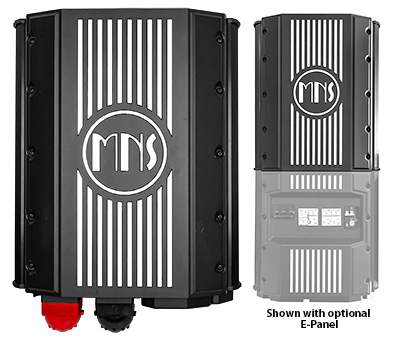
Read: MidNite Rosie — A Modern Component-Based Off-Grid Solar System →
What About Existing OutBack Systems?
There are still many OutBack systems operating around the Big Island. If one develops a problem, I don't automatically recommend throwing the system away.
The first job is diagnosis. If a failed component can still be obtained and repairing it makes economic sense, keeping a good existing system operating may be the right answer.
When parts availability, repeated failures, changing loads or the overall condition of the equipment make continued repair impractical, then we can discuss replacement.
Read: Should I Repair or Replace My OutBack Solar System? →
Modern Lithium Batteries Changed Off-Grid Design
Lithium batteries have made it possible to build compact battery banks with substantial usable energy, high charging capability and modern battery-management systems.
But battery selection still has to be matched to the inverter and loads. I look at usable kWh, continuous current, short-duration output, charge limits, communications compatibility, environmental requirements and how multiple batteries operate together.
Modern closed-loop communication can also allow compatible batteries and inverters to exchange operating limits and state information directly through the BMS.
Big Island Weather Changes the Design
Solar production isn't identical across this island. Cloud cover, elevation, local weather and shading all matter.
A system in a wetter location needs enough array and a sensible backup strategy to recover after poor weather. I don't want to size a system only around the best solar day of the month.
Off-Grid Solar Troubleshooting
Some of the most valuable information comes from systems that don't behave the way their owners expect. These are exactly the problems I work through:
Battery says full, then power dies
We look at actual battery voltage, BMS behavior, load current, cabling and surge—not just the displayed percentage.
Water pump shuts the house down
Motor startup, battery current capability, voltage drop and inverter surge all become part of the diagnosis.
Generator runs but charging is weak
Generator output, inverter programming, charger limits, battery limits and solar interaction all need to be checked.
One battery behaves differently
Parallel lithium banks depend on balanced wiring, communication and batteries that are actually sharing current properly.
DIY Off-Grid Solar on the Big Island
Not every customer wants the same level of involvement. Some want equipment and system design so they can do much of the work themselves. Others need troubleshooting, commissioning or help identifying the correct replacement equipment.
SolarMan supplies off-grid equipment and helps customers understand how the pieces should work together. Electrical work that requires a licensed contractor should be performed by an appropriately licensed electrician.
Areas We Serve on Hawaiʻi Island
SolarMan works with off-grid customers throughout the Big Island, including East Hawaiʻi communities where stand-alone solar is particularly common.
Start With the House, Not the Equipment
If you're building a new off-grid system, I want to know what the house needs before deciding which inverter or battery belongs in it.
Useful information includes your major appliances, water pump, air conditioning, water heating, generator, expected nighttime loads, unusual shop equipment and anything else with a large motor or heating element.
From there we can work backward into inverter capacity, battery storage, PV array size and generator requirements.
Planning or Troubleshooting an Off-Grid Solar System on the Big Island?
Whether you're starting from scratch, replacing older equipment, expanding an existing system or trying to understand why your current system isn't working correctly, start with the actual loads and the equipment you already have.
Doug Mycko
SolarMan Consulting, LLC
Big Island, Hawaiʻi
808-313-0608
www.SolarManHawaii.com
Big Island Off-Grid Solar Guides
Frequently Asked Questions
How big should an off-grid solar system be for a Big Island home?
It depends on the home's daily and nighttime energy use, largest simultaneous loads, motor surge, desired battery reserve, local solar conditions and generator strategy. Start with the loads rather than choosing an inverter first.
Can I run a water pump on off-grid solar?
Yes, but the pump's starting surge matters. Horsepower, voltage, pump type, inverter surge capability and battery output capability should all be checked.
Can off-grid solar run air conditioning at night?
Yes, when the battery bank and solar array are sized for the energy requirement. Overnight A/C can consume substantial kWh even when the inverter has no difficulty running it.
Do I still need a generator with a large battery bank?
That depends on the desired autonomy, local weather, PV array and loads. For many fully off-grid homes, a properly integrated generator is valuable backup for extended poor solar conditions.
What is the best inverter for an off-grid home?
There isn't one answer for every house. Load requirements, surge, battery compatibility, generator integration, serviceability, support and budget all affect the choice.
Does SolarMan work on existing off-grid systems?
Yes. SolarMan provides off-grid design, equipment supply, troubleshooting, repair support and commissioning assistance, including many existing OutBack systems.
SolarMan Consulting provides off-grid solar design, equipment supply, troubleshooting and commissioning support. Electrical installation requiring a contractor license should be performed by appropriately licensed personnel.