I'm Doug Mycko, owner of SolarMan Consulting. One of the most common mistakes I see in off-grid solar is choosing a battery by looking at one number: kilowatt-hours.
That's important—but it isn't enough.
A battery bank has two jobs. It has to store enough energy to get you through the night and poor solar weather, and it has to deliver enough power to run the house when large loads start.
Start With Daily Energy: How Many kWh Does the House Use?
The first number I want is the home's actual daily energy consumption. Refrigerators, freezers, lights, electronics, pumps, cooking, water heating and air conditioning all contribute.
A 1,000-watt load running for five hours uses about 5 kWh. A 100-watt load running for ten hours uses 1 kWh. The challenge is that real houses have dozens of loads cycling on and off at different times.
Nighttime Use Often Matters More Than the Daily Total
Solar panels can carry loads and recharge batteries during good daylight. After sunset, the battery carries the house.
That means two homes using the same 20 kWh per day can require different battery banks. One may consume most of its energy while the sun is shining. The other may run air conditioning, pumps and appliances heavily after dark.
A Well or Catchment Pump Can Change Everything
Motor loads are where simple battery calculations often fall apart.
A pump may not consume much energy over an entire day because it only runs for short periods. But when the motor starts, it can demand several times its normal running current for a brief period.
That surge has to travel through the inverter and ultimately come from the battery bank.
This is why I want the actual pump horsepower, voltage and model when designing an off-grid system. “I have a water pump” isn't enough information.
Air Conditioning Is Different
Air conditioning usually creates the opposite problem. Modern inverter-driven mini-splits can have relatively manageable starting characteristics, but they can run for many hours.
That makes air conditioning an energy-storage problem, especially overnight.
If an A/C averages 1,000 watts for ten nighttime hours, that's roughly 10 kWh before we've powered the refrigerator, freezer, pumps, lights or anything else in the house.
Cloudy Big Island Weather Has to Be Part of the Design
A battery bank isn't designed only for a perfect sunny day. Parts of the Big Island can have extended cloudy and rainy periods.
The correct question isn't just, “Can the battery get me through tonight?” It is also, “What happens tomorrow morning if the solar array doesn't refill it?”
That is where solar-array size and generator backup become part of battery sizing.
The Generator Is Part of Battery Sizing
A properly integrated generator can keep an off-grid system practical without installing an enormous battery bank solely to survive the worst weather of the year.
But the generator, inverter charger and battery all have limits.
Generator Output
The generator has to support the charging load plus whatever house loads are operating at the same time.
Inverter Charger
The inverter determines how much AC power can be converted into DC charging current.
Battery Charge Limit
The battery bank determines how much charging current it can safely accept.
Recovery Time
A large battery bank charged too slowly can require an unnecessarily long generator run after poor solar weather.
One Large Lithium Battery or Several?
Modern lithium batteries are available in increasingly large capacities. That can simplify installation, but the battery's maximum continuous discharge current and short-duration capability still matter.
Sometimes one large battery supplies both the energy and power the house requires. In other applications, multiple batteries in parallel are needed not because the customer needs all of their kWh, but because the system needs more available current.
Why I Look Closely at Modern 16 kWh Batteries
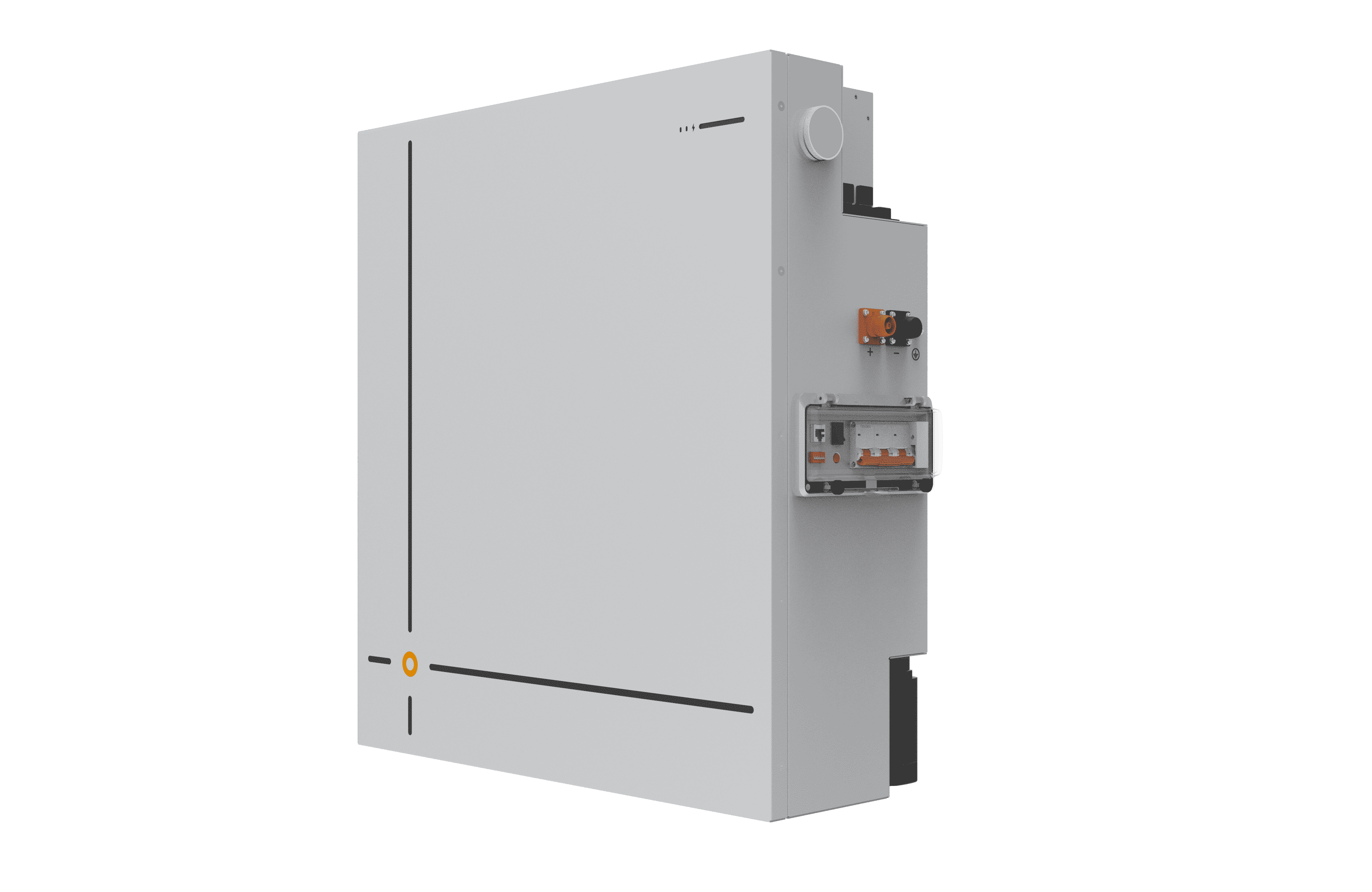
The new generation of roughly 16 kWh lithium batteries is particularly interesting for off-grid homes. A battery such as the Pytes V16 puts substantial storage into a single enclosure and is designed around modern BMS communication.
That doesn't mean I size a system by saying “one V16 per house.” I still look at the inverter, expected continuous loads, motor surge, overnight consumption, charging sources and required reserve. The battery has to fit the system—not the other way around.
Closed-Loop Communication Is Worth Understanding
Modern lithium batteries contain a Battery Management System, or BMS. With compatible equipment, the battery can communicate operating information and limits to the inverter system rather than forcing the inverter to infer everything from battery voltage.
Compatibility matters. Before pairing a battery and inverter, I want to know whether the manufacturers support the communication combination and what firmware or communications protocol is required.
How I Size an Off-Grid Battery Bank
I don't start with a battery brochure. I start with the customer's house.
1. Daily kWh
How much energy does the house actually consume in 24 hours?
2. Overnight kWh
How much of that consumption occurs when the solar array isn't producing?
3. Peak Loads
What can operate simultaneously, and what is the inverter expected to supply?
4. Motor Surge
What pumps, compressors and other motors have to start from battery power?
5. Solar Recovery
Can the array recharge the battery while also carrying daytime loads?
6. Generator Recovery
How quickly can backup generation recover the bank after poor weather?
Don't Buy Battery Capacity You Can't Recharge
More battery isn't automatically better.
If the battery bank is enormous but the solar array is too small to recharge it, the system can spend much of its life partially charged and relying heavily on the generator.
Battery storage, PV array size and generator charging should be designed as one system.
Need a Battery Bank Sized for Your Big Island Home?
Send me the major loads in the house, pump information, air-conditioning information, generator size and anything you know about daily energy use. I'll look at the complete system rather than simply selling you a number of batteries.
Doug Mycko
SolarMan Consulting, LLC
Big Island, Hawaiʻi
808-313-0608
SolarManHawaii.com
Related SolarMan Guides
Frequently Asked Questions
How many kWh of battery do I need for an off-grid house?
It depends on daily and overnight energy use, desired reserve, solar production and generator strategy. Two homes with the same daily kWh can need different battery capacity because their loads occur at different times.
Why can a water pump shut down a battery system even when the batteries are charged?
A motor can demand a very large short-duration starting current. The battery and inverter must be capable of supplying that power even though the pump may use relatively little total energy per day.
How much battery do I need to run air conditioning overnight?
Estimate the A/C's average operating power multiplied by expected nighttime run hours, then add the home's other overnight loads and reserve. Actual consumption varies substantially with equipment, temperature, insulation and thermostat setting.
Is a bigger battery bank always better?
No. The solar array and generator still have to recharge it. Oversizing storage without enough charging capacity can create an expensive system that is slow to recover.
Can one 16 kWh lithium battery run an off-grid house?
Sometimes, but kWh alone does not answer the question. Continuous battery output, inverter size, motor surge and the home's peak simultaneous loads also have to be checked.
SolarMan Consulting provides off-grid solar design, equipment supply, troubleshooting and commissioning support. Electrical installation requiring a license should be performed by appropriately licensed personnel.